You will need:
Tools
- Measuring tape
- Spirit level
- Spade
- Flat shovel
- Stanley knife
- Angle grinder or saw
- Rubber hammer
- Stamper or vibrating plate (you can rent it at the garden center)
- Rake
- Work gloves
- Wheelbarrow
Materials
- Picket posts and rope
- Wooden rail in the width of the path
- Curbstones – or plastic / wooden palisades
- Anti-root fabric
- Rubble
- Stabilized sand (1 part cement on 7 parts sand)
- Gravel
Laying a gravel path in 5 steps
Step 1: Set the path
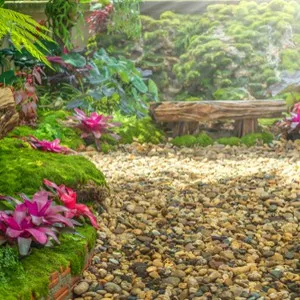
To get a good impression of the shape and course of the path, first set it completely with picket posts and rope. If you want to be able to walk easily over it, the path must be at least 80 centimeters wide.
Step 2: Dig out the path
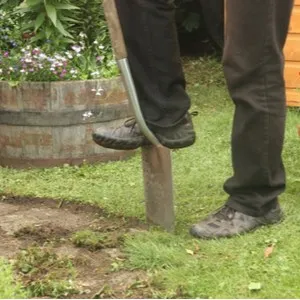
Dig a trench 15 centimeters deep. If the soil is very soft, 20 centimeters is advisable, after which you fill the trench with sand to the correct working depth. Cut the edges as sharp as possible with the spade and regularly check the width of the trench with a rail.
Step 3: Apply the borders
To keep the gravel in place, you will have to finish the edges of the path with a border. The most used are curbstones, but you can also opt for a palisade of plastic or wood.
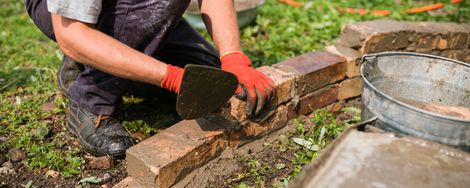
Cut or saw the curb stones to size. Dig a small groove on both sides in the trench and lay in these grooves a thin layer of stabilizer sand. Put in the border stones, apply some stabilizer sand against the edges, and tap them in place with a rubber hammer. Allow to harden.
Step 4: Lay the anti-root cloth
Spread anti-root cloth on the bottom of the trench. This has a dual function: it prevents the gravel from disappearing into the soil and holds weed growth in check. Use a Stanley knife to cut the fabric to size. Let the pieces overlap at least 10 cm and make sure that the fabric fits well everywhere.
Step 5: Apply rubble and gravel
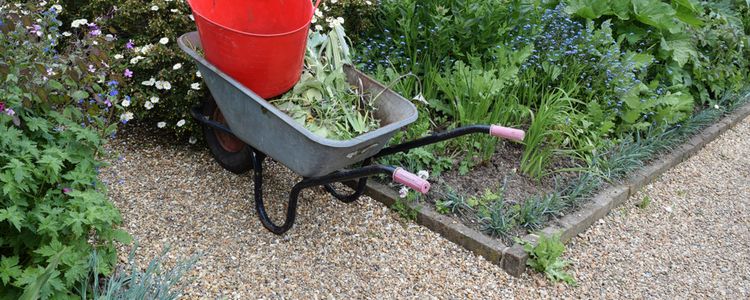
Scoop rubble (you can also use stabilizer sand) over the anti-root cloth, spread it evenly with a rake and press it firmly with a stamper or vibrating plate. Spread the gravel on this foundation and rake smooth. The gravel layer must be at least 5 centimeters thick.
After a few weeks the path may have collapsed somewhat and it will be necessary to add some gravel.
A few more ideas for semi-paved garden paths
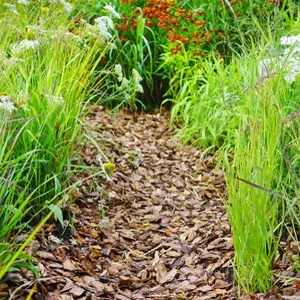
Instead of gravel, you can also use tennis court gravel, split or dolomite. The preparatory work is the same. Other beautiful, natural materials for a garden path are, for example, shells, wood chips, or bark of conifers. All these materials are for sale in most garden centers.