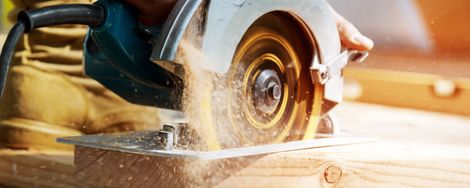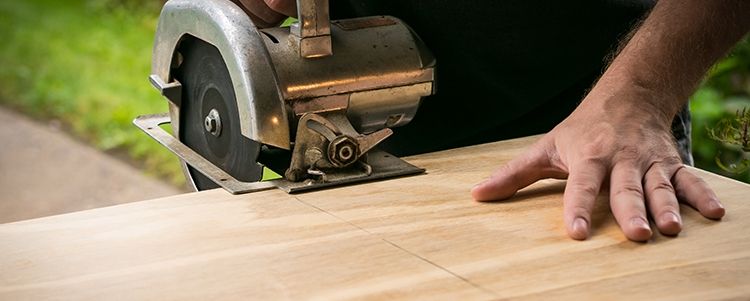
Sawing without splinters is possible with any type of saw, because the problem is not in the saw, but in the way you use it.
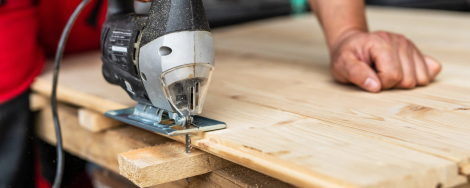
With the jigsaw
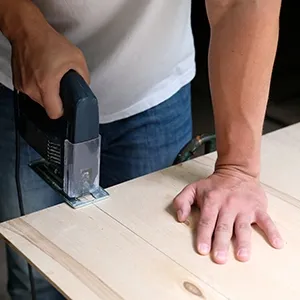
A jigsaw is actually not the ideal tool for these materials, but if you have nothing else at hand you can use it well. The standard saw blade with which a jigsaw is usually supplied is less suitable, but saw blades specifically for plywood are available for all well-known brands. The most important thing is that the saw blade is razor sharp. That applies to all types of saws.
Two tips to prevent splinters:
• Use a ruler and a Stanley knife to make a notch along the length of the cut before you start sawing.
• Tape the top and bottom of the sheet material with painting tape and mark the cutting line on it. This simple precaution also works for the other saws.
With the circular saw
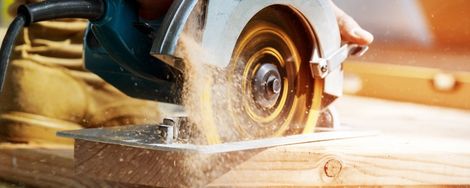
When you tackle plywood or veneered furniture board with a circular saw, the splinters are created at the top. What you can do is saw twice. First you make a shallow cut of 3 to 4 mm and then you cut the board. This prevents the wood fibers from being lifted up, creating a friable cutting edge.
The type of saw blade is also important. That must be fine toothed. A circular saw blade with at least 80 teeth is recommended.
You can prevent the wood from crumbling at the end of the cut by holding a piece of waste wood against the back.
With the table saw
A table saw is ideal for cutting sheet material, but not every do-it-yourselfer will have one in his workshop. The same applies to a table saw as to a circular saw, you need a razor-sharp saw blade with at least 80 teeth. There are even special saw blades for plywood with 180 teeth.
A good tool for table saws is a “zero clearance insert”. This useful accessory ensures that there is only a minimal gap between the saw blade and the miter plate on either side. This not only increases safety, but also supports the wood fibers, reducing the risk of splintering and crumbling.
With the handsaw
Because it is not easy to make long straight cuts with a handsaw, it is not the first thing you’ll reach for. But if you have nothing else to grab, this simple tool can also be used. Obviously, a saw with fine, sharp teeth works best. And clamping a bar to saw along helps to reach the other side without detours. Take your time and saw with slow, small movements.