Buy a set or rather loose drills?
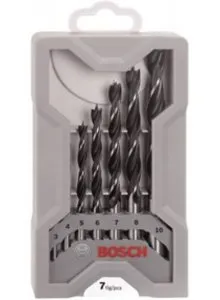
A standard wood drill set is usually sufficient for occasional jobs at home. And you can also use a metal drill bit to drill into wood (not the other way around!). But those who want to work more professionally avoid improvisations of this kind and click in the right drill in their drilling machine for every job. In a semi-professional do-it-yourself kit the following wood drills should not be too far away from your drilling machine:
- Standard wood drill
- Snake drill
- Speed drill
- Countersink
- Hole saw
Standard wood drill
Like all wood drills, you recognize the standard model at the centering point. This pointed tip is pressed into the wood before you start drilling, so that the drill can not slide away and the hole will be exactly in the right place. A wood drill set usually consists of seven drill bits of 3 to 10 mm in diameter.
Standard wood drills can be used for both softwood and hardwood and are suitable for most common jobs.
Snake drill
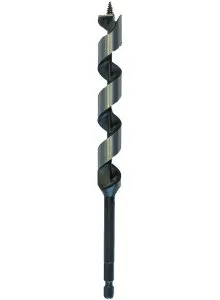
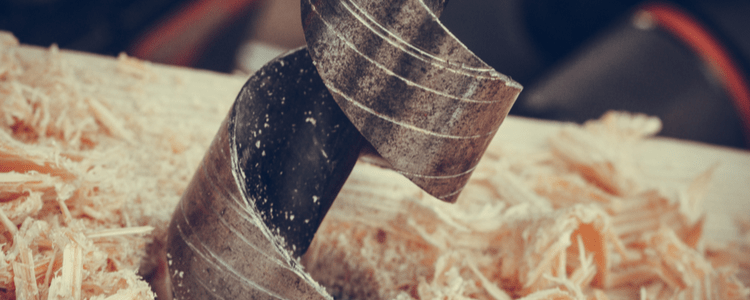
With a snake drill you can make deep holes. This is the appropriate type when, for example, you have to drill in thick beams. The spiral shape – which meanders around the shaft like a snake – ensures that the drill dust is properly drained and a clean, smooth hole is created. A striking characteristic of the snake drill is the helical point, with which you can precisely center.
Speed drill
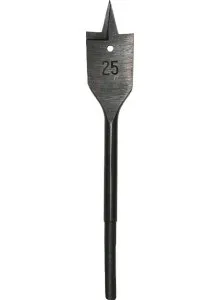
A speed drill comes in handy for drilling through holes for cables and pipes. Where a set of normal wood bits ends, the speed drill continues: with this drill type you can drill holes from 11 millimeters. Work with a speed drill at a high speed and make sure you drill at a right angle to prevent the wood from splintering. It’s also applicable to use when to drill through thick wood.
Tip: Drill until the point comes out on the other side and then drill the last piece away from that side. This way you get a nice, smooth borehole on both sides.
Countersink
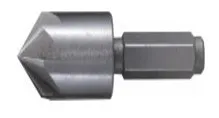
You use a countersink drill to finish drill holes, so that the screws will not protrude. The oblique shape of the drill head creates a conical recess in which the screw head disappears.
Hole saw
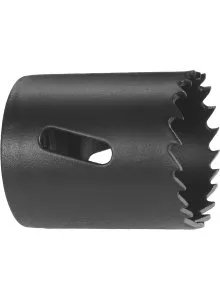
We did not think of the name either, a hole saw is definitely a drill, although it has teeth like a saw. You use a hole saw when you want to drill large holes in not too thick sheet material. When you buy a set, you’ll always have the right diameter at hand. Working with a hole saw is best done at low speed.