In new constructions, underfloor heating is frequently included. It’s not only an extremely convenient way to heat your home — but also energy-efficient. Installing underfloor heating in an existing home is possible in many cases, though it requires a significant investment and involves a lot of work. Read here about the options available.
Hydraulic or Electric
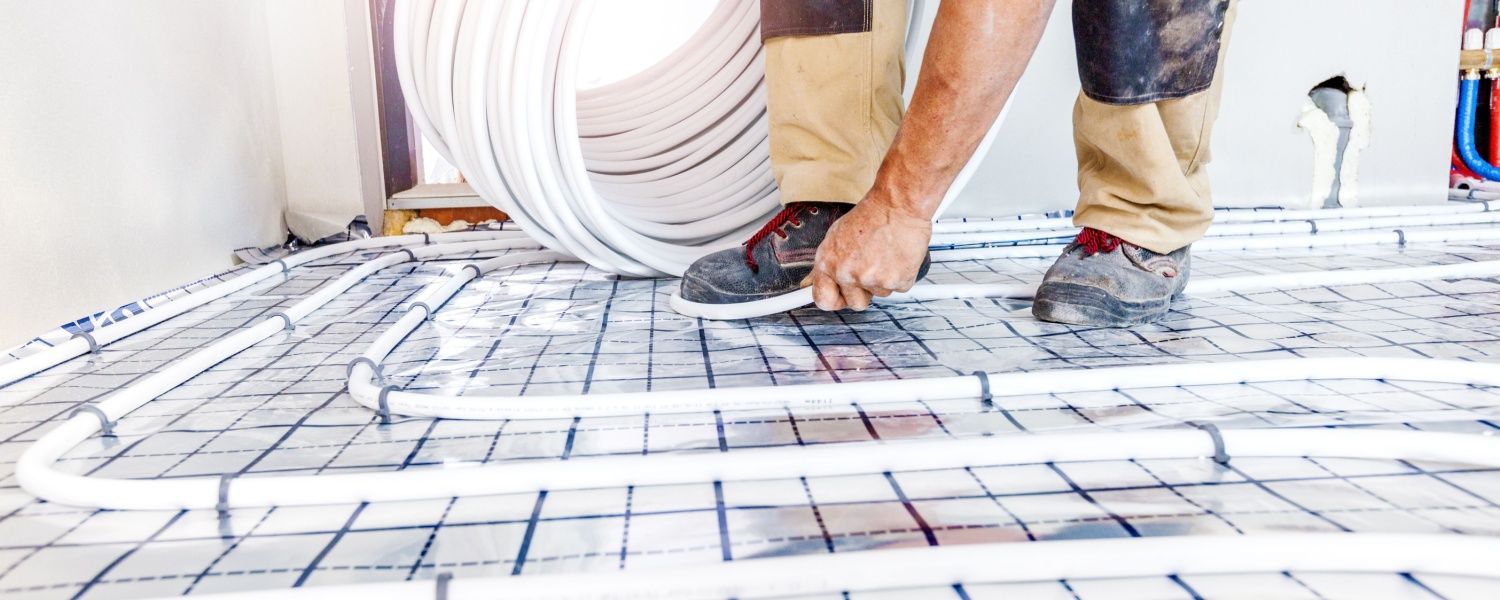
There are two systems for underfloor heating: hydraulic and electric. With hydraulic underfloor heating, warm water flows through a network of pipes under the floor. This water can be heated by the boiler, but installing a heat pump is a much more energy-efficient option. Electric underfloor heating works with heating mats.
Wet Installation, Dry Installation, and Milling
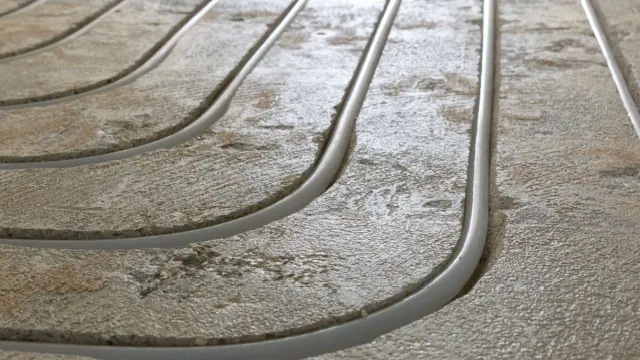
There are several ways to place the heating pipes under the floor. In wet installation, they are embedded directly in the cement. It is a simple and relatively cheap way to install underfloor heating but is really only suitable for new constructions due to the required installation height of about 16 to 20 cm.
A dry installation system fits better in an existing home. The pipes of a dry installation system are placed on polystyrene mats. Since the installation height does not exceed about 6 cm, this system is suitable for existing floors. The efficiency of a dry installation system is better than that of a wet installation. The heat is distributed more easily, making it warm up faster. However, the installation costs are higher.
The cheapest form of installation is laying the heating pipes in grooves milled into the existing screed. If your home has concrete floors suitable for this, it also means less demolition and breaking work, and no additional height is needed.
Electric Underfloor Heating
Underfloor heating mats with electric wiring can be placed directly under the floor. This system is cheap to install and barely raises the floor height. A disadvantage is the high electricity consumption. Electric underfloor heating is therefore only interesting in combination with solar panels or as supplementary heating, for example, in a bathroom or hobby room.
Which Floors Are Suitable for Underfloor Heating?

Since the heat needs to pass through the floor surface to heat the room, choose floor types with low thermal resistance. Ceramic tiles and natural stone are perfect for underfloor heating. Both materials can absorb and distribute heat quickly. The same is true for poured floors. Cork is also an option. Since cork is also a good insulator, it takes longer for the heat to reach the surface, but cork also retains that heat longer. With parquet floors, the type of wood is important. Lighter types, such as maple, beech, and birch, are not suitable because the parquet can deform due to moisture, dryness, and heat. On the other hand, oak parquet can be well combined with underfloor heating.