What is artificial grass?
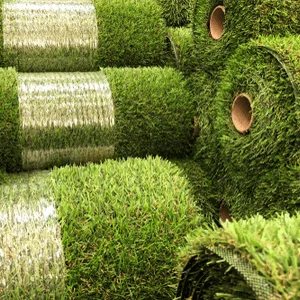
Artificial grass or turf is made in the same way as carpet. Fibers made of polyethylene or polypropylene are “tufted” in a bottom layer and the end result comes out of the machine in rolls.
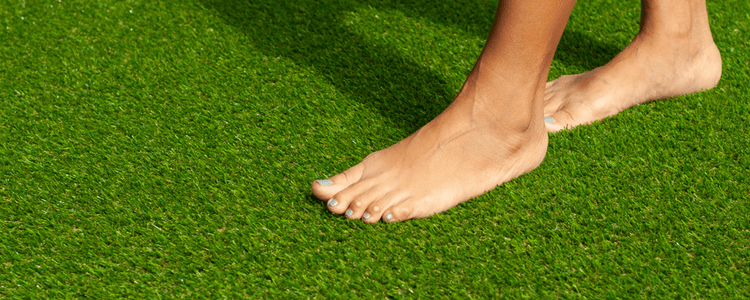
You can choose from a large number of artificial turf types for your lawn, which differ in color, pile height and mat thickness, among other things. Things like the pile weight, the number of grams of fiber per m2, the back weight and the weight of the underlay in which the artificial blades of grass are attached determine the quality. Deciding which species is suitable for your garden depends on the intensity with which the lawn is used. If your children play a lot on the grass, you need a strong quality. Your personal taste also plays a role. For example, there are all kinds of colour variations, from darker to lighter green, and often brown fibers are incorporated into the turf for the most natural appearance.
Tip: Look for a supplier who has show gardens so you can see and feel the grass before making a choice.
Laying out a lawn of artificial grass in 9 steps
You’ll need these materials
- Artificial grass
- Road worker sand
- Ground cloth
- Artificial grass tape
- Artificial grass pens
These tools come in handy
- Spade
- Flat shovel
- Rake
- Straight bar
- Stanley knife
- Rubber mallet
- Hard broom
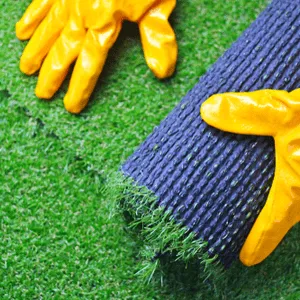
- Work gloves
- Remove the old grass and dig the soil out about 10 cm. Level the soil with a rake.
- Apply a 10 cm thick sand layer, spread the sand evenly with the rake and level with a wooden slat.
- Now, spread the ground cloth over the sand. This prevents potholes from forming in your lawn and stops roots and weeds.
- Roll out the first roll of artificial grass and smooth it. Where necessary, cut it to size on the back with a utility knife.
- Do the same with the roll that will be next to it and allow the rolls to overlap a little (4mm). Note that the wing – the direction in which the blades of grass point – is the same.
- Next, fasten the rolls tightly together with artificial grass tape. Fold over the edges of both rolls and unroll the tape in the center of the seam. Remove the foil from the tape and press the rolls firmly.
- Continue to work until the entire lawn is laid out, then trim any edges and corners with a utility knife.
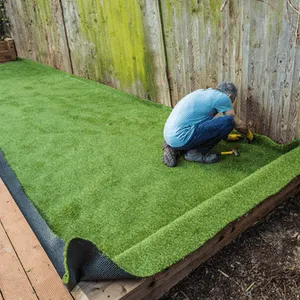
- To prevent your new lawn detaching in strong winds, you can strengthen it even more with synthetic turf spiders. You put these in the corners and along the edges through the turf and nail them in the ground with a rubber hammer.
- Finally, brush the entire lawn with a hard broom to get the blades that are pressed flat on the roll upright.