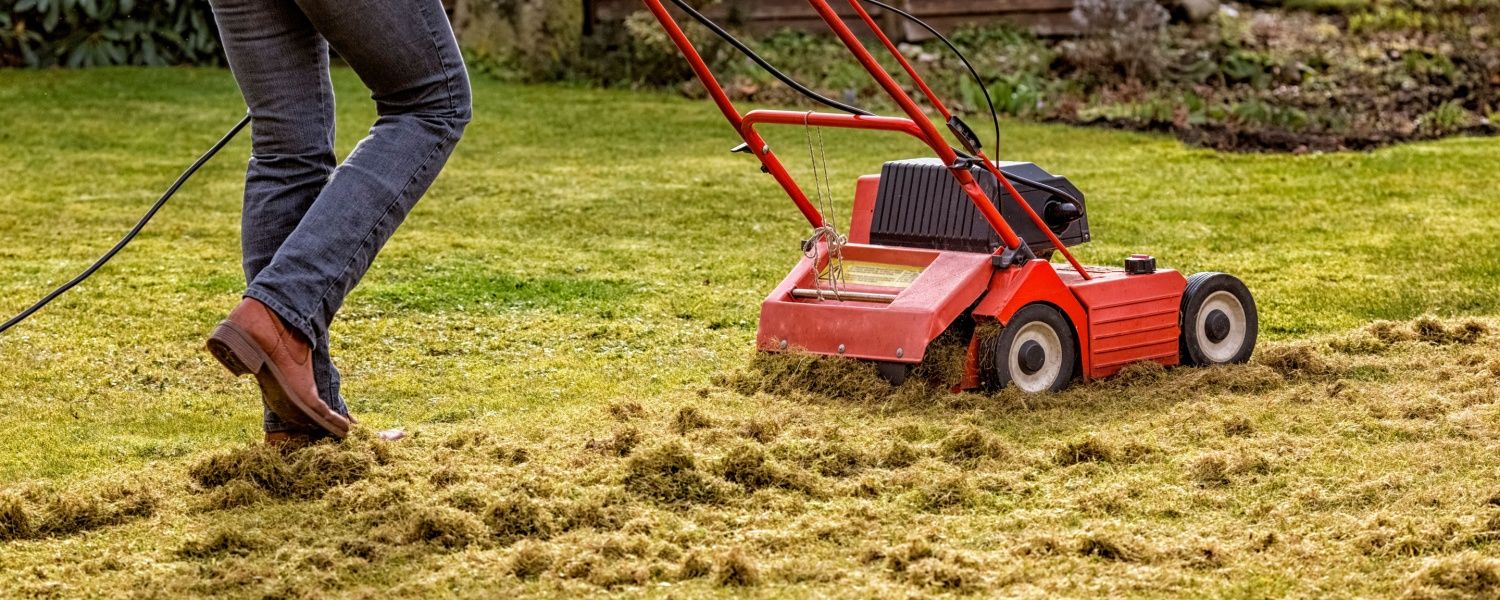
Achieving a beautiful, green, and healthy lawn doesn’t happen alone. It requires some effort occasionally, and scarifying is one of those essential tasks. Read here what scarifying does for your lawn and how to tackle this job effectively.
What is Scarifying?
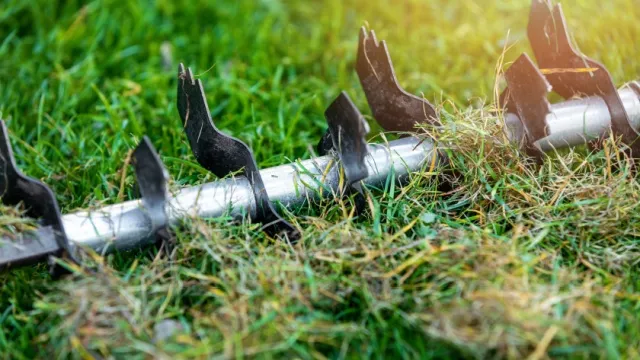
One of the meanings of scarifying is ‘making incisions’; this describes exactly what you do when you scarify: making vertical cuts in the grass. For a small lawn, you can use a scarifying rake, but for a larger lawn, you can choose scarifiers that run on mains electricity or batteries. The blades of the scarifier or rake cut through the top layer of the lawn, and with their hook shape, they pull out the ‘thatch layer’ of moss, weeds, and dead grass. They also cut through the grass roots, stimulating the grass to root deeper. Scarifying allows the grass to breathe and lets nutrients reach the roots more easily, resulting in a denser and healthier turf.
When to Scarify?
Scarifying is not a daily task. Twice a year is sufficient for the desired result. The best periods are spring (March-April) and autumn (September-October). In the spring, you help your lawn recover from winter and prepare for the growing season. In autumn, you ensure the grass is healthy going into winter.
Scarifying in 4 Steps
- Start with mowing: Set your lawnmower to a height of 3 to 4 cm. Scarifying works best when the grass is slightly moist; a day after a rain shower is ideal. If it has been dry for a while, give the lawn a light sprinkle.
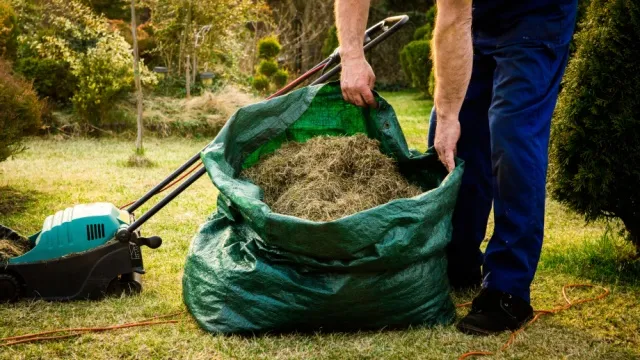
- Clear debris: Remove the clippings and any other debris from your lawn.
- Adjust the depth: Set the depth of the scarifier. Adjust this to the thickness of the thatch layer. For a thick layer, choose the deepest setting of the machine; for a thin layer, work more shallowly.
- Scarify in straight lines: Start at one end of the lawn and pull the scarifier in straight lines. Remove the debris and then scarify again, perpendicular to the previous lines. Remove the debris again, which will be much less than the first time. This method is for a full turf. If your lawn is quite bare, it is better to scarify only one way.
After Scarifying
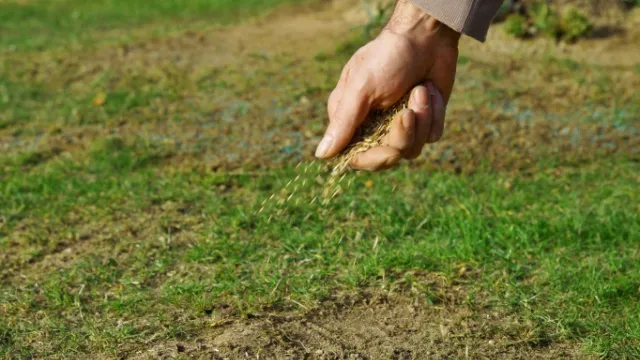
After scarifying, your lawn may not look great, but it will quickly recover and return stronger. The grass is now in the best condition to absorb nutrients. Use special lawn fertilizer to stimulate growth. This is also the time to seed any bare spots. In dry weather, you’ll need to water regularly for the first few days to help the grass seeds germinate better. After about a week, you will see the first results.
Read Also: Summer Tips for the Lawn