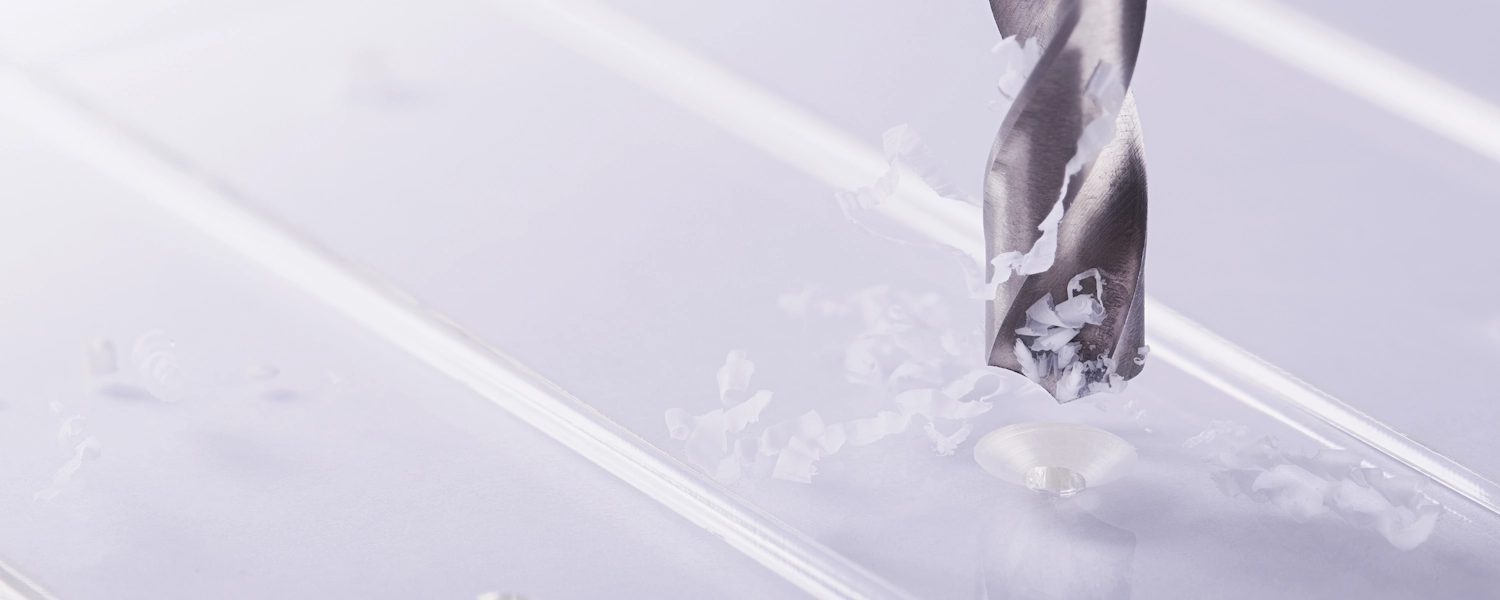
Drilling into plastic comes with a few challenges. Plastics can melt, crack, or split if not handled correctly. Here, we explain how to avoid these risks and provide practical tips for drilling into plastic.
Use the Correct Drill Bit

The type of drill bit you use is essential in preventing issues. HSS metal drill bits are suitable for all plastics. These have a sharp tip and high cutting power. When drilling into plastic, the drill bit must be new and razor-sharp. Using an old or dull bit can cause the workpiece to heat up excessively during drilling, leading to unsatisfactory results. For softer plastics, you can also use a wood drill bit.
Drill at Low Speed
One of the biggest problems when drilling into plastic is that the material can melt due to heat generated by friction. High drilling speeds can quickly generate too much heat, causing the plastic to warp or melt. Use a low drilling speed and apply light pressure to minimise friction and heat. Take breaks to allow the material to cool between drilling.
Prevent Overheating by Cooling
As an extra measure against melting, it may be necessary to cool the material. This is especially important when drilling into thicker plastics or when drilling multiple holes. To avoid melting, you can use water with dish soap. A few drops on the drill tip should suffice.
Pre-Drill with a Small Bit
Pre-drilling is advisable if you want to create larger holes in plastic. By first drilling a small pilot hole and then using a larger drill bit to reach the desired size, you reduce the risk of the material cracking or splitting. This is particularly important for thicker or harder plastics.
Drill at the Correct Angle
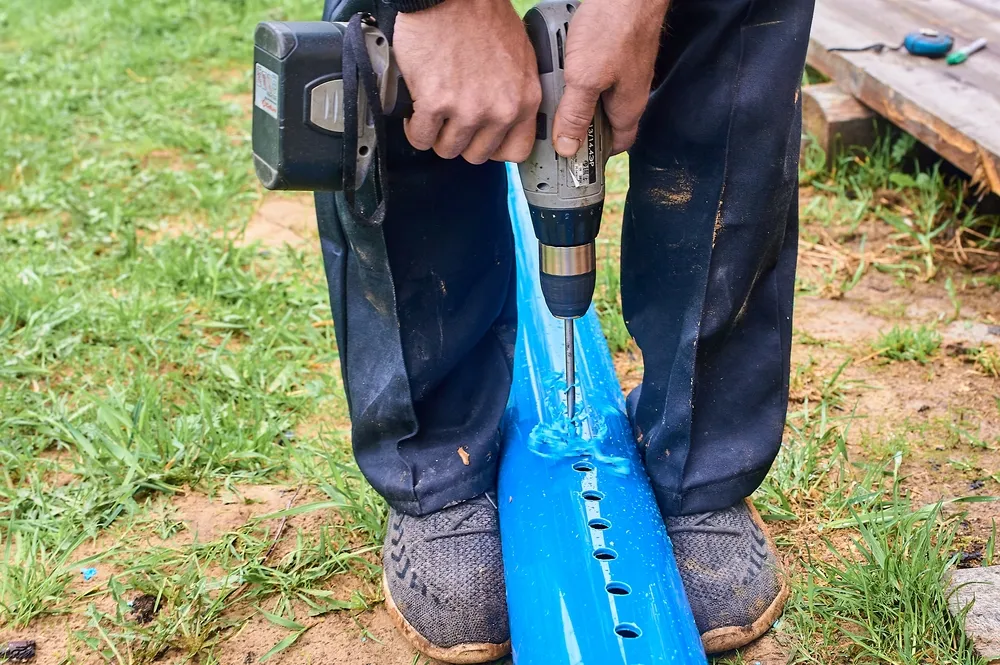
The angle at which you drill affects the quality of the work. Professionals recommend drilling perpendicular to the workpiece at a 90-degree angle. This ensures a clean, even hole and reduces the risk of cracking, chipping, or splitting. Keep the drill steady while drilling, as movement can cause the material to crack.
Support the Workpiece
Plastics can easily crack or split, especially if they are thin or if the workpiece is not properly supported. Placing a wooden board beneath the plastic can help prevent the material from cracking during drilling. This also provides a more stable surface and prevents splintering on the underside of the hole.
Finish the Drill Hole Neatly
Drill holes in plastic may have rough edges or burrs. Use fine sandpaper or a deburring knife to smooth the edges and ensure a clean finish.
For more advice on working with ‘difficult’ materials, check out Cutting Plexiglass Yourself.